My family of origin was pretty small: I have one brother, a niece and nephew, a few cousins, and used to have a scattering of aunts and uncles who weren’t close. Both my mother’s parents died before she was twenty-five. My dad lost two brothers: one to tuberculosis and one to polio. In many ways, my parents were children of loss not only because of the early deaths in their families, but also because of the nature of the people who raised them.
Now I have a surprisingly large, warm extended family. This delightful situation has been created by all sorts of astonishing choices made by me and by others. One of the biggest surprises in my life is that I have been married three times. If someone had told me early on that my life would unfold in that way, I would have been convinced that that person was crazy. And I would have been horrified. Even more horrified because I became a very capable marriage counselor as part of my psychotherapy career.
Now I will appear to digress, but not really. There is some Russian folk tale about a farmer whose son falls off a horse and breaks his leg. “How terrible,” exclaim the neighbors. “Maybe yes, maybe no,” says the farmer. Later that week, the Czar sends soldiers to conscript able-bodied young men into the army. The farmer’s son is exempt because of his injury. “How wonderful!” exclaim the neighbors. “Maybe yes, maybe no,” says the unnaturally serene farmer. And the tale continues, with the ups and downs of life having a variety of unexpected outcomes. So despite my checkered marital career, the current state of affairs is a 20 year relationship with my husband Stan, and a blended family that is one of the greatest gifts of my life. I’m including a photo of Stan and me with nine of our twelve grandchildren. Two weren’t present at this particular gathering, and the latest one wasn’t born yet. Yes, TWELVE grandchildren, and none of us are Catholic or part of any other group that blanches at contraception.
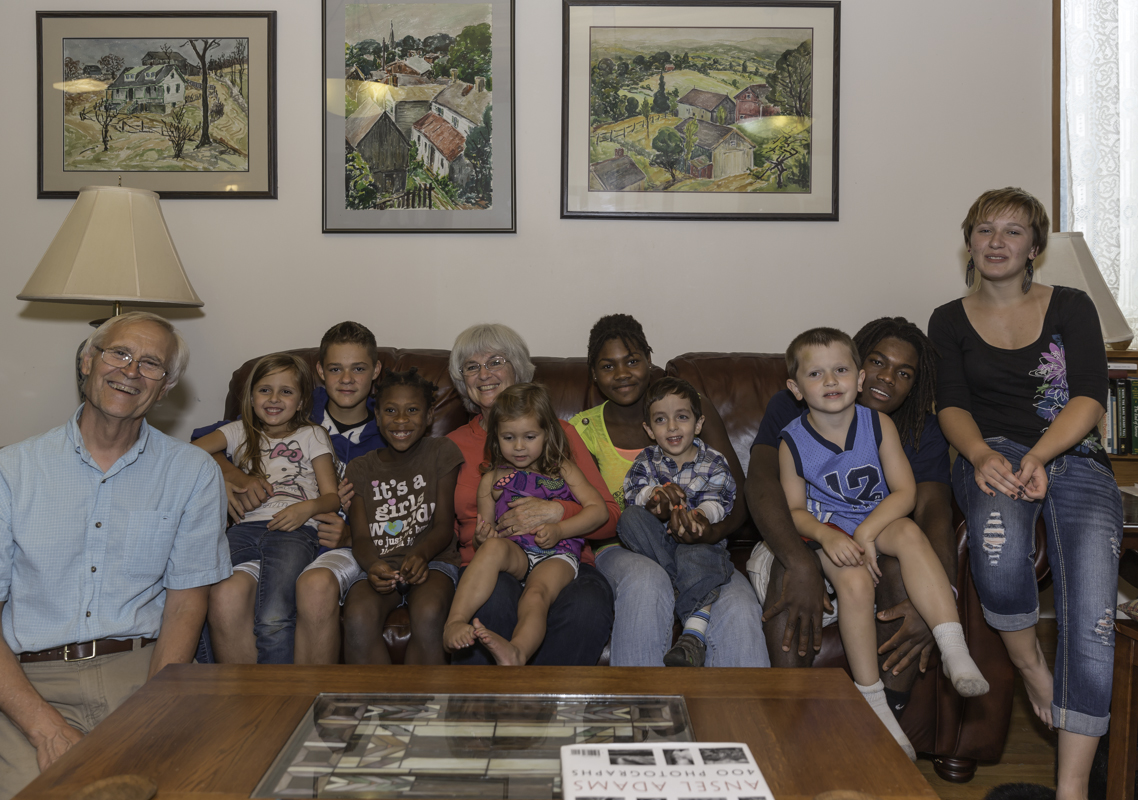
You will notice the variety of colors, as well as sizes, among our grandchildren. My daughter, who never was eager to become a parent and generally preferred the company of animals to the company of people, up and adopted five children from Haiti and gave birth to two white kids. Go figure. The ages of the four Haitian siblings were nine, six, and four. When they could speak enough English, they told my daughter than she and her husband needed to also adopt their older brother, about whom we had known nothing. The oldest boy came to the US at age fourteen to join the family. Another Haitian child came along through medical necessity and the devastating Haitian earthquake.
After a year or two passed, thrilled with my extended family, I became inspired to write a song called, “We All Belong,” and to record it at a professional studio. I invited the young kids, some of whom are now young grownups, to sing in the chorus.
We All Belong
 Susan Rose: Singing Grandma